IPTV stands for Internet Protocol Television. In simple terms, it is a way of delivering television and video using internet networking rather than relying only on traditional terrestrial, cable or satellite broadcasting.
The technology can support live television, scheduled programming and on-demand video, depending on the service.
How Does IPTV Work?
Traditional broadcast television sends a signal through a broadcast network.
IPTV delivers video data using internet protocols.
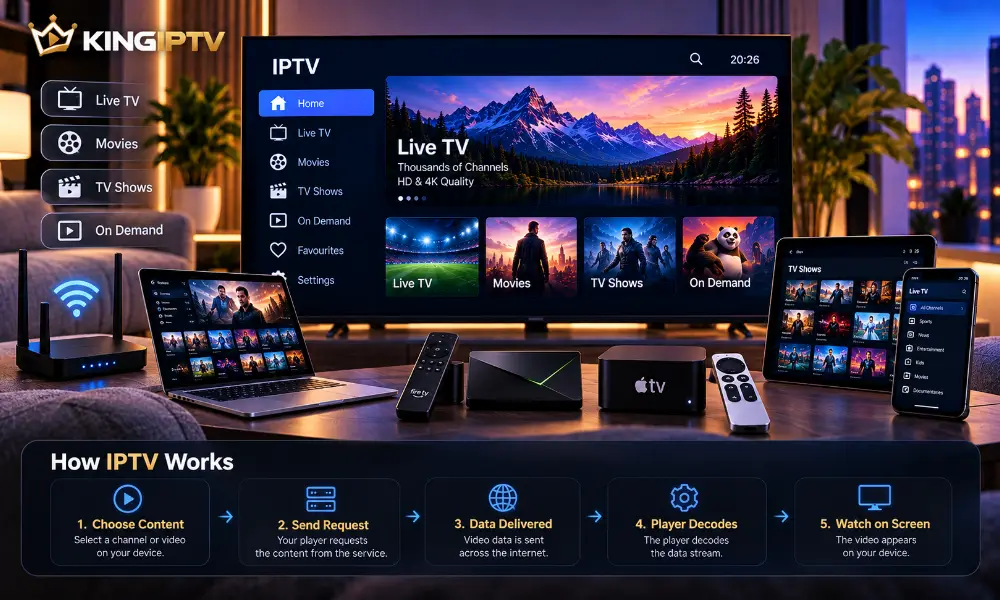
At a basic level:
- You choose something to watch.
- Your device or player requests the content from the service.
- Video data is delivered across a network.
- The player decodes that data.
- The video appears on your screen.
The exact infrastructure differs between services, but the underlying idea is network-based delivery.
Main Types of IPTV
Live Television
Live IPTV delivers scheduled programming as it happens.
Video on Demand
On-demand services allow viewers to choose available video and start it when they want.
Time-Shifted Viewing
Some authorised services allow selected programmes to be watched after their original broadcast time.
The features available depend entirely on the provider.
What Do You Need for IPTV?
Internet Connection
Streaming requires a sufficiently stable connection.
Higher-quality video generally needs more bandwidth.
Compatible Device
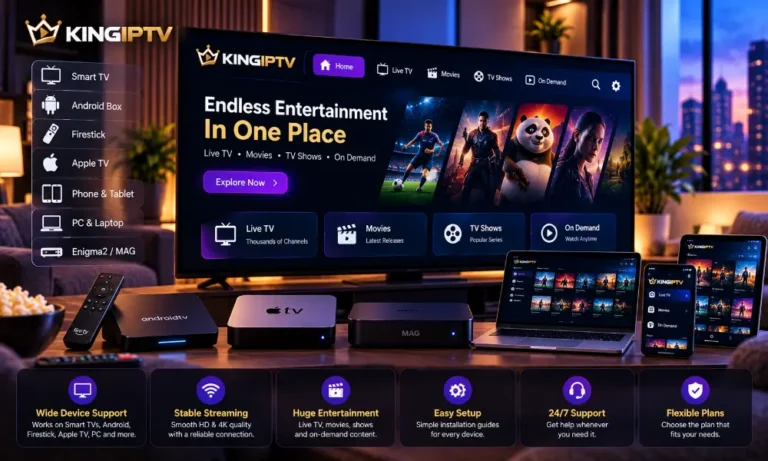
Depending on the service, compatible hardware may include:
- smart televisions;
- streaming boxes;
- phones;
- tablets;
- computers;
- compatible receivers.
Player or Application
The software provides the interface and handles playback.
See our Android IPTV player guide and Apple TV IPTV guide for platform-specific considerations.
Subscription or Authorised Source
Commercial services normally require an active subscription.
Free authorised sources can also use internet television technology.
Benefits of IPTV
Flexibility
Internet delivery can work across several categories of connected devices.
On-Demand Viewing
Compatible services can combine live and on-demand content in one environment.
Device Choice
You are not necessarily restricted to a traditional television receiver.
Convenient Setup
Some configurations can be established without traditional broadcast installation.
Limitations
Dependence on the Network
If your internet connection fails, internet-based viewing can also be affected.
Wi-Fi Problems
Weak wireless coverage can cause interruptions even when the broadband connection itself is fast.
Device Compatibility
Not every application works on every television or operating system.
Provider Quality
Reliability and customer support differ between services.
IPTV vs Traditional Television
Traditional television generally relies on dedicated broadcast infrastructure.
IPTV relies on IP networking.
This can provide more flexibility, but it also makes the quality of the internet connection more important.
Neither technology is automatically superior for every household.
Is IPTV Legal?
IPTV technology itself has legitimate uses.
The legal question concerns what content is being distributed and whether the provider has the appropriate rights or permissions.
Use authorised sources and consider the rules applicable in your country.
The World Intellectual Property Organization provides general educational information about copyright.
Does IPTV Require Special Hardware?
Not always.
If your existing television or connected device supports an appropriate player, additional hardware may be unnecessary.
If you do need hardware, see our IPTV box buying guide.
Why Does IPTV Buffer?
Possible causes include weak Wi-Fi, congestion, device limitations and connectivity problems.
Follow our IPTV not working troubleshooting guide if you experience repeated interruptions.
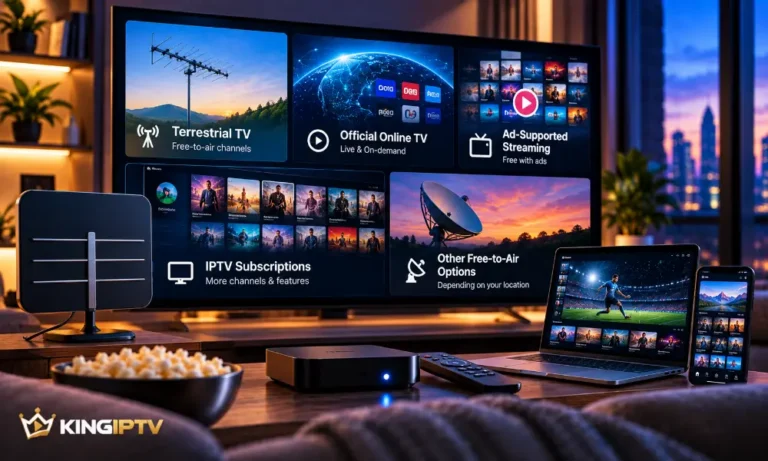
Free vs Paid IPTV
Legitimate free internet television exists, but free and paid services usually have different business models and feature sets.
Our free IPTV guide explains the distinction in more detail.
Frequently Asked Questions
Is IPTV the same as a streaming service?
IPTV is a method of delivering television or video using internet protocols. Individual streaming services can use different technical approaches and business models.
Do I need fast internet?
You need enough bandwidth for the video quality being delivered, but stability and Wi-Fi quality also matter.
Can IPTV work on a smart TV?
It can work on compatible televisions when suitable software and an authorised service are available.
Is IPTV legal?
The technology is legitimate. The legality of a particular service depends on its content rights, operation and applicable law.
Final Thoughts
IPTV moves television delivery onto internet-based networks, making viewing possible across a broad range of compatible devices.
Its advantages are flexibility and device choice, while its main dependency is a reliable network.
To learn about the service behind this website, visit the main KING IPTV page or compare current subscription options.